Fast Facts: Garden Room Insulation
- Insulating a medium-sized garden room typically costs £500–£2,000 in total.
- Insulation boards and Rockwool both run £20–£30 per m²; vapour barrier adds just £1–£2 per m².
- Insulation thickness typically ranges from 25mm to 100mm, depending on the area and material.
- PIR boards give the best thermal performance for the least thickness – ideal where space is tight.
- Roofs generally need thicker insulation than walls, since warm air rises and heat loss is greatest overhead.
- Retrofitting insulation into an existing garden room is possible without a full rebuild.
If you are planning on insulating a new Garden Room build or upgrading an existing one, this guide is for you. We’ll walk you through how you can insulate a modern Garden Room, the best materials for floor, wall, and roof insulation and the costs of different types of insulation.
PMG Garden Rooms build insulated Garden Rooms in St. Albans. With 40+ years of experience under our belt, we provide advice based on practical experience.
Let’s start with how you can insulate a Garden Room and expert insights on insulation materials best suited for it.
How to Insulate a Garden Room: Types of Garden Room Insulation
If you are wondering how to build an insulated Garden Room you need to start with a plasterboard on the inside, then a vapour control layer, an insulation layer, followed by structural boards such as oriented strand board with breathable membrane and completed with battens & cladding.
When it comes to insulation, there are many types in the market to choose from. Here are some insulation materials our experts suggest for your Garden Room build:
- PIR Boards: High-performance insulation boards, such as PIR (Polyisocyanurate), offer effective thermal resistance and are suitable for walls, floors, and roofs.
- Mineral Wool and Rockwool: Known for its fireproof, thermal and acoustic properties, Rockwool is an excellent option for walls and ceilings.
- Spray Foam Insulation: Ideal for sealing gaps and creating an airtight barrier, spray foam provides superior insulation and air leakage prevention.
- Vapour Barriers: Installing a vapour barrier is essential to protect the insulation from moisture and ensure its longevity.
- Plasterboard: Used to cover insulation and create a smooth, finished interior surface.
Insulation Material Comparison
| PIR Boards | Mineral Wool / Rockwool | Spray Foam | |
|---|---|---|---|
| Best for | Walls, floors & roofs where space is tight | Music rooms, offices near busy roads, sound-sensitive spaces | Sealing gaps and awkward junctions |
| Thermal performance | High performance for its thickness; low thermal conductivity | Slightly less efficient per mm than PIR | Creates an airtight barrier, preventing air leakage |
| Typical thickness | Thinner boards can match thicker wool for the same U-value | Needs more thickness than PIR to reach the same U-value | Applied to fill the gap – not a fixed board size |
| Typical cost | £20–£30 per m² | £20–£30 per m² | Not fixed-price per m² – ask PMG for a spec-specific quote |
| Extra benefit | Works well with underfloor heating in floors | Strong fire resistance and acoustic performance | Best option for stopping draughts at edges and joints |
Figures based on PMG Garden Rooms’ insulation guide. Costs are indicative – for an exact spec, get in touch.
One important factor to consider is the thickness of the insulation material. The thickness of the insulation impacts its thermal resistance, or R-value, which determines how well the material resists heat flow.
For instance, thicker insulation boards will provide better insulation but may require adjustments to the Garden Room’s structural design. Typically, insulation boards range from 25mm to 100mm in thickness, and the choice depends on the areas you are insulating, specific insulation needs and space availability.

Insulating a Garden Room Wall
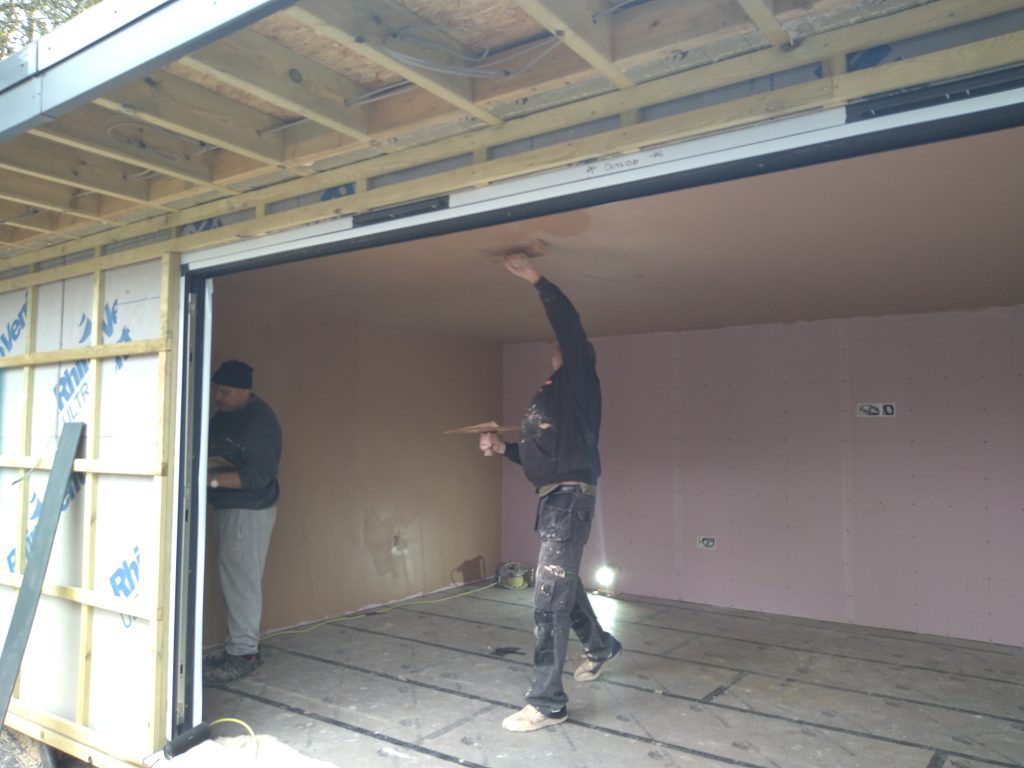
Most modern Garden Rooms use an insulated timber frame wall. Within this frame, insulation products sit between studs.
- PIR rigid boards – give high performance for their thickness and low thermal conductivity compared to wool products. Boards sit tightly between studs and are a good choice where every centimetre inside the room matters.
- Mineral wool or rockwool – if sound control is a priority. It is slightly less efficient per millimetre than PIR, so they need more thickness to reach the same U value, but they have strong acoustic and fire performance. These products suit music rooms, garden offices near busy roads, or any space where noise reduction matters.
- Cavity slabs – are semi-rigid wool boards designed for cavity walls. They friction-fit between studs, resist mould and vermin, and offer good acoustic performance with similar thermal properties to mineral wool rolls.
Whatever material you choose, gaps around the edge or between boards reduce performance sharply. A snug fit plus some sealant or foam at awkward spots turn a decent plan into a strong one.
Insulating a Garden Room Roof
Garden Room roofs often need thicker insulation than the walls, as warm air rises and upward heat loss can be significant.
Our experts suggest:
- Cold roof provides insulation between rafters, with a ventilated gap above the insulation and below the outer coverings. Fresh air in that gap carries away moisture. This design suits many low-profile buildings where height near the boundary needs careful control.
- Warm roof is designed for insulation the structural deck, with the waterproof layer on top. This avoids the need for ventilation voids and improves performance but adds depth to the roof build-up, which can affect planning limits.
PIR boards between rafters work well for both methods. Mineral wool batts are a good option as well but at a greater thickness. Remember to add a vapour control layer on the room side plus careful sealing around rooflights or junctions to prevent cold spots and condensation issues.
Insulating a Garden Room Floor
A cold floor makes any room feel less inviting. That is why floor insulation is non-negotiable in a quality build.
- Use PIR boards for optimal thermal performance: They prevent heat from slipping out even with a slim layer, so you keep more headroom and floor space. A deeper PIR layer underfoot helps stop heat slipping into the ground and keeps the surface feeling warm, even on cold mornings. This type of insulation also works well with underfloor heating, as heat moves up into the room instead of sinking away.
- Use Mineral wool for sound reduction and design flexibility: It needs more thickness than PIR to reach similar performance, so works best in floors with enough depth to spare.
A well-insulated floor supports lower running costs and makes the whole Garden Room feel more comfortable to use.
How Much Does It Cost to Insulate a Garden Room
Understanding the costs involved in insulating a Garden Room helps in planning your project effectively. Here’s a breakdown of potential costs:
- Insulation Boards: £20-£30 per square metre.
- Rockwool Insulation: £20-£30 per square metre.
- Moisture/ vapour Barrier: £1-£2 per square metre.
- Plasterboard: £15-£20 per sheet.
For a medium-sized Garden Room, the total cost of insulation typically ranges from £500 to £2000. This investment not only enhances the comfort and usability of your Garden Room but also adds value to your property.
For more detailed information on Garden Room costs, you can refer to our comprehensive guide on Garden Room costs.
The PMG Garden Rooms Insulation Process
Every strong build at PMG starts with a simple set of questions:
- How do you plan to use the room, office, gym, studio, guest space?
- Which direction does the Garden Room face and how much sun it receives?
- What budget feels realistic and how close to the main house thermal performance should the design aim at?
Based on the responses to these questions, PMG selects the insulation materials and thickness, window and door specifications, and plans for vapour and moisture control.
PMG’s standard insulation process:
- Start with design and site checks: Orientation, access, base type, and room use office, gym, studio all feed into insulation choices and target U values.
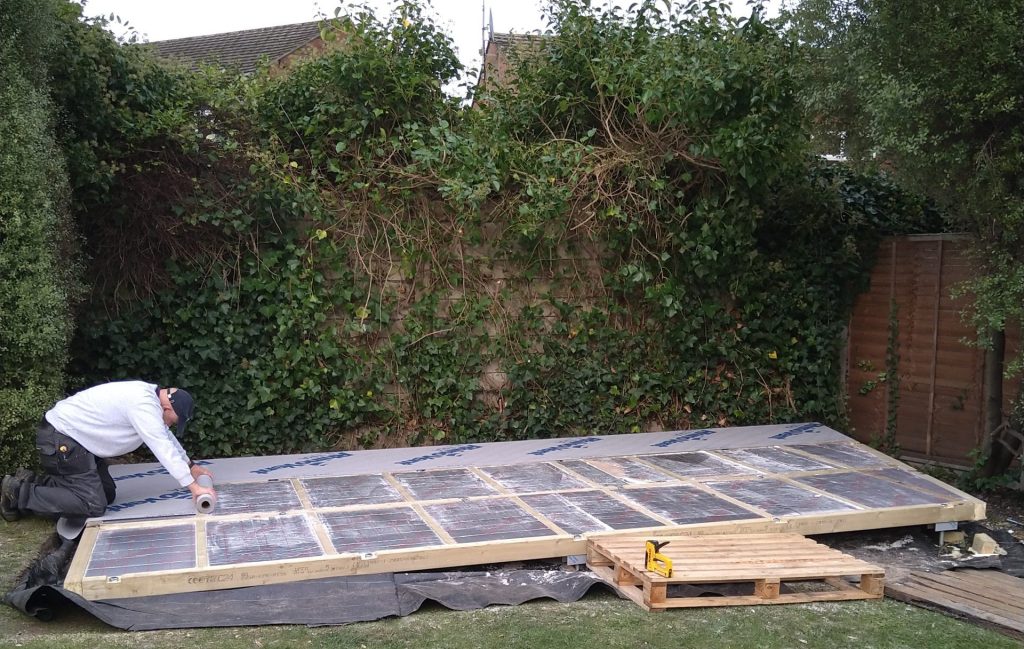
- For the floor: A treated timber frame sits over the base and a PIR board drops between joists, a vapour barrier goes on top, then moisture resistant chipboard forms a solid, warm deck.
- Walls follow the same logic: A timber frame with OSB sheathing receives PIR or mineral wool between studs, a breathable membrane outside, vapour control layer inside, then plasterboard for a smooth finish.
- Roof insulation completes the envelope: Insulation sits between joists in a cold roof build or above the structure in a warm roof build, with a vapour control layer and plasterboard ceiling on the room side.
- Sealing and Ventilation: Foam and sealant close gaps around windows, doors, and services, while opening lights and trickle vents provide controlled fresh air so the insulated shell stays dry and comfortable.
If you need more expert guidance on building a Garden Room, our article on how to build a Garden Room walks you through structure, foundations, and services.
Frequently Asked Questions
Q. What is the best insulation material for a Garden Room?
The best insulation material depends on your specific needs and budget. Rockwool is excellent, due to its thermal, fire-resistant and acoustic properties. High-performance insulation boards like PIR are also effective for walls, floors, and roofs due to their thermal resistance.
Q. How to insulate a Garden Room on a budget?
Focus on the shell first. Spend where floor, wall, and roof insulation deliver long-term gains. Choose simpler finishes for now. A future upgrade for furniture and tech feels easier than tearing up flooring to add boards. For more detailed information on Garden Room costs, you can refer to our comprehensive guide on Garden Room costs.
Q. How to insulate a Garden Room roof without planning problems?
When insulating a Garden Room roof, the overall height of your Garden Room will determine the planning rules you need to adhere to. The planning portal recommends a maximum eaves height of 2.5 metres and a maximum overall height of 4 metres with a dual pitched roof, or 3 metres for any other roof. You can select a cold or warm roof insulation based on the height. If you are unsure, consult a builder or PMG’s surveyor for a recommendation.
Q. Does insulation prevent condensation?
Warmer surfaces plus vapour control layers and breathable membranes give moisture fewer cold surfaces to settle on. Regular ventilation then removes moisture from indoor air. Together these measures hold condensation and damp at low levels.
Q. Is it possible to retrofit insulation in an existing Garden Room?
Yes, it is possible to retrofit insulation in an existing Garden Room. However, the process may require structural adjustments and professional installation to ensure optimal results. Retrofitting can improve energy efficiency and comfort without the need for a complete rebuild.
Talk To Us
As leading Garden Room builders in St Albans, we pride ourselves on delivering top-quality construction and insulation services. Our comprehensive service ensures that you get the best value and quality for your investment. While the process involves several steps and materials, the results are well worth the investment. Check our project portfolio – it showcases a diverse range of Garden Rooms, from snug retreats nestled in small gardens to expansive studios that make a statement.
Proper insulation is vital for maximising the functionality and comfort of your Garden Room. Strong insulation turns a Garden Room from an occasional summer hangout into a space for work, exercise, guests, and hobbies throughout the year. The right layers in floor, walls, and roof make far more difference than trends in furniture or accessories.
If you are struggling with building your Garden Room or need professional help with insulation, contact PMG Garden Rooms today. Our team of experts is here to guide you through the insulation process and ensure your Garden Room is a cosy and energy-efficient space all year round.
Related Posts